• About
  • Blog
  • Submissions
  • Prizes
  • Purchase
  • University of Tampa Press

Tampa Review

Celebrating 60 Years of Literary Publishing

News

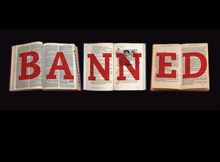
All the Cool Kids Read Banned Books
September 23, 2013 by utpress Leave a Comment

banned

Yesterday marked the first day of banned books week this year, and there is much to celebrate. According to the event’s webpage, the week is an annual celebration of intellectual freedom from censorship that was kicked off in 1982 in response to mounting censorship of literature in schools. Since its inception, “[m]ore than 11,300 books have been challenged,” the website states.

One would hope the trend of banned books would have faded over the past few decades, but in the past month alone both Ralph Ellison’s 1952 Invisible Man and Cuban-American Cristina García’s 1992 Dreaming in Cuban have been banned from high schools for their content.

Ellison’s Invisible Man, which tackled twentieth century racial prejudice and beat out Hemingway’s Old Man and the Sea and Steinbeck’s East of Eden for the National Book Award, has been banned from school libraries in Randolph County, North Carolina. One school board member reportedly said the book had no “literary value.” Invisible Man has already been banned in the past from Pennsylvania, Wisconsin and Washington state schools.

García’s Dreaming in Cuban, which follows the multi-generational lineage of women in a family in revolutionary Cuba, has been banned from classrooms in Sierra Vista, Arizona.  The novel has been referred to as “porn” and “child pornography” by those opposing the book’s inclusion in school curriculum. Dreaming in Cuban was also a finalist for the National Book Award.

I’d like to believe there are no racial implications in the banning of these books, but at least in Arizona’s case, the state doesn’t have a very flattering history of racist school curriculum. But that doesn’t make the banning any less ridiculous and, ultimately, meaningless.

Public school officials need to realize the danger they place themselves in when they support censorship in the era of free information and the internet. They’re fighting an embarrassingly losing battle against the exchange of ideas in America, showing how dispensable the censored curriculum they offer really is.

Here’s my advice to parents and students.

Read as many banned books as you can. Don’t just read banned books during this week, make a lifelong habit of gorging yourself on all kinds of literature with brutal and voracious hunger. Be especially curious of banned literature, because censorship throughout history has been reserved for the most frighteningly powerful words. According to the banned books week webpage, Ellison and García find themselves among some staggeringly brilliant names and titles, including Twain’s The Adventures of Huckleberry Finn; The Autobiography of Malcolm X; Toni Morrison’s Beloved; Jack London’s The Call of the Wild; Joseph Heller’s Catch-22; Tennessee Williams’s A Streetcar Named Desire; Zora Neale Hurston’s Their Eyes Were Watching God; Harper Lee’s To Kill a Mockingbird; Allen Ginsburg’s Howl; and, laughably, even Ray Bradbury’s literary censorship novel, Fahrenheit 451.

Take a weekly family drive to your city’s public library, or visit mom and pop bookstores–both desperately need you to walk through their doors as often as possible. If you can’t find what you’re looking for there, consider finding free e-book versions of classic literature at the Project Gutenberg website. In fact, throw them a few dollars in donation. The page offers over 42,000 books in the public domain and many more via affiliate sites.

Trade books with your friends and family, and buy them as gifts.

My advice to school officials is this. Don’t allow your libraries, your school curriculum, to become expendable. Don’t make a mockery of learning. Don’t speak in ignorance about books that added incalculably more to the public conversation when they were published than you could ever take away by removing them from your shelves. Help the kids in your schools become mature adults by giving them the benefit of the doubt; trust them, and guide them through the mature ideas that make these works so integral to our society. Make them care and keep them in the classroom, because the more books you ban, the harder your communities will push to make sure that instead of smoking, the cool kids are reading banned books in the bathroom.
Posted in: News Tagged: banned, books, censorship, cool, Ellison, Garcia

My Friends Call Me Sleazus

September 9, 2013 by utpress Leave a Comment

The Penguin Press has released a bizarre trailer for the new Thomas Pynchon book. His latest, The Bleeding Edge, is available September 17th.

According to Penguin, in his new book, “Thomas Pynchon brings us to New York in the early days of the internet.” A write up at Penguin’s site tells us this about the new book:

With occasional excursions into the Deep Web and out to Long Island, Thomas Pynchon, channeling his inner Jewish mother, brings us a historical romance of New York in the early days of the internet, not that distant in calendar time but galactically remote from where we’ve journeyed to since.

Will perpetrators be revealed, forget about brought to justice? Will Maxine have to take the handgun out of her purse? Will she and Horst get back together? Will Jerry Seinfeld make an unscheduled guest appearance? Will accounts secular and karmic be brought into balance?

Hey. Who wants to know?

I do. Especially after watching the trailer, which is narrated by a young man wearing a shirt that reads Hi, I’m Tom Pynchon. After telling us that, “My friends call me Sleazus,” he takes us on a journey through his neighborhood, and finally to the park for a moment of moisturizing you won’t soon forget.

Pynchon’s eccentric trailer is unlike any other book trailer I’ve ever seen. Which, in this era of sameness, is a very good thing.

Posted in: News Tagged: Book trailer, books, Fiction, Pynchon

Seamus Heaney: Tonight He Dines With Yeats

August 30, 2013 by utpress Leave a Comment

Seamus Heany
I received this note from our Poetry Editor, Jim Gustafson today on the passing of Seamus Heaney.

Jim wrote:

“This morning I learned that Seamus Heaney died at 74 years old. He was just seven years older than I. He was an important poet to me and to the world, for that matter. I would not have any enthusiasm to argue against those who would say he was our greatest living poet.

News of  his death stirred that something that makes me want to try to write a poem. I thought of his 1995 Nobel Lecture which I occasionally listened to as I walk. In that talk he says, “I credit poetry for making this space-walk possible.” With that in mind, I began to write. I watched my words come out in the slow sentimental drips that come in mourning and thought it best to move-on in prose, where sentimentality is allowed to whisper.

Heaney was never far from the shadow of his father. Like Roethke and others, there is a connection between poet, father, and earth that cannot be shaken. In his book Death of a Naturalist, his poem “Follower” recalls how, as he father plowed the Irish field, he followed behind “tripping, falling and /yapping always.” The poem ends with the lines:

But Today
It is my father who keeps stumbling
Behind me, and will not go away.

Perhaps I feel close to Seamus Heaney because we share fathers who won’t go away. Perhaps it is our mutual awareness that our fathers’ toil made it possible for us to escape the fields. Whatever it was, he is the sort of poet who enters the room with his words. And in all the days ahead, when we read his poems, he will be behind them. He will not stumble, nor will he go away.”

Well said.


Posted in: News Tagged: poetry, Seamus Heaney

F. Scott Fitzgerald’s 22 Essential Books

August 27, 2013 by utpress Leave a Comment

fitzgerald_reading_list

Here’s a great reading list given to F. Scott Fitzgerald’s nurse and written down in her handwriting.

Here’s more on the list from Open Culture:

In 1936 — perhaps the darkest year of his life — F. Scott Fitzgerald was convalescing in a hotel in Asheville, North Carolina, when he offered his nurse a list of 22 books he thought were essential reading. The list, above, is written in the nurse’s hand.

Fitzgerald had moved into Asheville’s Grove Park Inn that April after transferring his wife Zelda, a psychiatric patient, to nearby Highland Hospital. It was the same month that Esquire published his essay “The Crack Up”, in which he confessed to a growing awareness that “my life had been a drawing on resources that I did not possess, that I had been mortgaging myself physically and spiritually up to the hilt.”

Here’s the list in full:

  1. Sister Carrie, by Theodore Dreiser
  2. The Life of Jesus, by Ernest Renan
  3. A Doll’s House, by Henrik Ibsen
  4. Winesburg, Ohio, by Sherwood Anderson
  5. The Old Wives’ Tale, by Arnold Bennett
  6. The Maltese Falcon, by Dashiel Hammett
  7. The Red and the Black, by Stendahl
  8. The Short Stories of Guy De Maupassant, translated by Michael Monahan
  9. An Outline of Abnormal Psychology, edited by Gardner Murphy
  10. The Stories of Anton Chekhov, edited by Robert N. Linscott
  11. The Best American Humorous Short Stories, edited by Alexander Jessup
  12. Victory, by Joseph Conrad
  13. The Revolt of the Angels, by Anatole France
  14. The Plays of Oscar Wilde
  15. Sanctuary, by William Faulkner
  16. Within a Budding Grove, by Marcel Proust
  17. The Guermantes Way, by Marcel Proust
  18. Swann’s Way, by Marcel Proust
  19. South Wind, by Norman Douglas
  20. The Garden Party, by Katherine Mansfield
  21. War and Peace, by Leo Tolstoy
  22. John Keats and Percy Bysshe Shelley: Complete Poetical Works

(Thanks to Tarcher/Penguin for the link)

Posted in: News Tagged: books, F. Scott Fitzgerald, reading

A New Documentary On The Future of Books

August 25, 2013 by utpress Leave a Comment

Out of Print is a documentary about the state of the publishing industry, the impact of Google and Amazon on publishing, and the future of books as we know them.

The documentary, which is narrated by Meryl Streep, is described on the official site as a movie that:

draws us into the topsy-turvy world of words, illuminating the turbulent and exciting journey from the book through the digital revolution. Jeff Bezos, Ray Bradbury, Scott Turow, Jeffrey Toobin, parents, students, educators, scientists – all highlight how this revolution is changing everything about the printed word – and changing us.

Here’s the trailer:


Posted in: News Tagged: books, ebooks, publishing, reading
« Previous 1 … 5 6 7 … 21 Next »

New & Noteworthy

  • Dana Baylous Wins 2026 Danahy Prize for Short Fiction
  • Kirk Schlueter Wins the 2025 Richard Mathews Prize for Poetry
  • Jay McKenzie Wins 2025 Danahy Prize
  • Flower Conroy Wins 2024 Richard Mathews Prize for Poetry
  • Tampa Review 68 Cover Reveal

Categories

  • Conversations
  • Cross-genre
  • Essay
  • Fiction
  • Interview
  • News
  • Nonfiction
  • Poetry
  • Review
  • Uncategorized
  • Visual Art

Social Media

Instagram

Copyright © 2026 Tampa Review.

Omega WordPress Theme by ThemeHall